If you use birth control, take antidepressants, or both, you’re not alone. Millions of people manage their mental health and reproductive health at the same time. Still, it’s normal to wonder: Do these medications affect each other? Will one make the other less effective? Could side effects get worse?
Let’s walk through what actually matters—without medical jargon, scare tactics, or judgment. Just clear, practical info you can use.
The short answer (for busy readers)
For most people, birth control and antidepressants can be used together safely. The majority of antidepressants do not reduce the effectiveness of hormonal birth control, and birth control usually does not stop antidepressants from working.
That said, there are a few important exceptions, and everyone’s body reacts differently. Knowing what to watch for can save you stress and help you make better choices with your doctor.
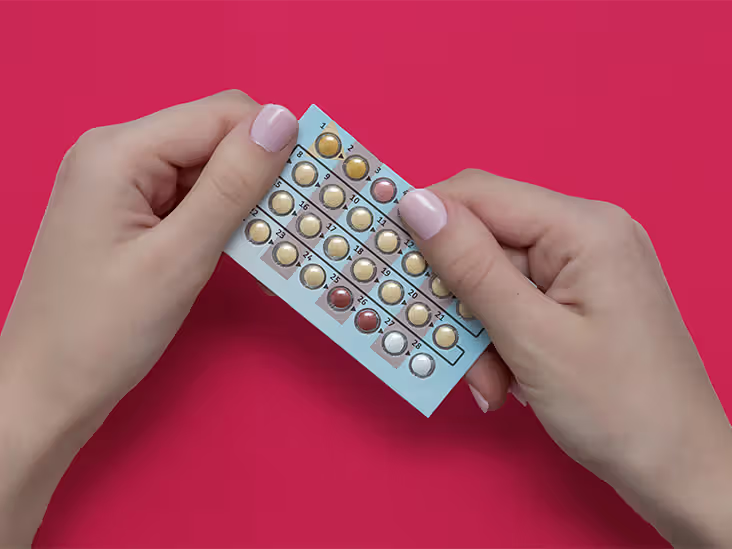
Common types of birth control
Birth control comes in many forms, but most questions focus on hormonal methods, including:
- Birth control pills (combined or progestin-only)
- Hormonal IUDs
- Birth control implant (Nexplanon)
- Birth control shot (Depo-Provera)
- Vaginal ring (NuvaRing, Annovera)
- Hormonal patch
Non-hormonal options like copper IUDs, condoms, and diaphragms don’t interact with antidepressants at all.
Common types of antidepressants
Antidepressants also come in several categories. The most commonly prescribed include:
- SSRIs (Selective Serotonin Reuptake Inhibitors)
- Examples: sertraline (Zoloft), fluoxetine (Prozac), escitalopram (Lexapro)
- SNRIs (Serotonin-Norepinephrine Reuptake Inhibitors)
- Examples: venlafaxine (Effexor), duloxetine (Cymbalta)
- Tricyclic antidepressants (TCAs)
- MAOIs (Monoamine Oxidase Inhibitors – less commonly used today)
- Atypical antidepressants
- Examples: bupropion (Wellbutrin), mirtazapine (Remeron)
Do antidepressants make birth control less effective?
For most antidepressants: No
According to multiple medical reviews, SSRIs and SNRIs do not interfere with hormonal birth control. This means your pill, IUD, implant, or ring should work just as well.
A large review published in Contraception found no consistent evidence that antidepressants reduce contraceptive effectiveness (CDC, 2016).
Trusted sources back this up:
- Planned Parenthood
- Mayo Clinic
- Centers for Disease Control and Prevention (CDC)
The main exception: St. John’s Wort
While not a prescription antidepressant, St. John’s Wort is sometimes used for mild depression. This supplement can reduce the effectiveness of hormonal birth control by speeding up hormone breakdown in the liver.
If you use St. John’s Wort, doctors often recommend a backup birth control method.
Can birth control affect how antidepressants work?
Usually, no. Hormonal birth control does not generally stop antidepressants from doing their job.
However, some people notice changes in mood after starting or switching birth control. This doesn’t mean antidepressants stop working—but hormones can influence how you feel.
Important reminder: mood changes are individual, not guaranteed.
Mood changes: what’s normal and what’s not
Some people feel:
- Slight mood swings during the first 1–3 months
- Temporary anxiety or irritability
- Changes in libido
Others feel better, more emotionally stable, or notice no change at all.
When to talk to your doctor
Reach out if you notice:
- Worsening depression or anxiety
- New suicidal thoughts
- Emotional numbness or extreme mood shifts
- Side effects that last longer than 3 months
You’re not being “dramatic.” Your mental health matters just as much as pregnancy prevention.
What about Wellbutrin and birth control?
Wellbutrin (bupropion) works differently from SSRIs and is often asked about.
Good news: current evidence shows no direct interaction between Wellbutrin and hormonal birth control. Many people take both safely.
However, because Wellbutrin can increase energy or anxiety in some people, changes in hormones might feel more noticeable. Tracking your mood helps.
Real-life factors doctors consider
Your provider may look at:
- Your mental health history
- Past reactions to hormones
- Migraine history (especially with aura)
- Smoking status
- Other medications
There’s no one-size-fits-all solution—and that’s okay.
Tips for using birth control and antidepressants together
- Tell your doctor everything you take (including supplements)
- Give new meds time (usually 2–3 months)
- Track mood changes in a journal or app
- Don’t stop meds suddenly without medical advice
- Advocate for yourself if something feels off
You deserve to feel mentally well and protected.
What experts and trusted sources say
Here are respected, evidence-based resources worth reading:
- CDC – U.S. Medical Eligibility Criteria for Contraceptive Use https://www.cdc.gov/reproductivehealth/contraception/mmwr/mec/summary.html
- Mayo Clinic – Antidepressants: Selecting One That’s Right for You https://www.mayoclinic.org/diseases-conditions/depression/in-depth/antidepressants/art-20046273
- Planned Parenthood – Birth Control and Medication Interactions https://www.plannedparenthood.org/learn/birth-control
- Harvard Health Publishing – Hormonal Birth Control and Mood https://www.health.harvard.edu
Final thoughts
Taking care of your mental health should never mean sacrificing reproductive control—and vice versa. For most people, birth control and antidepressants work just fine together.
The key is staying informed, listening to your body, and working with a provider who takes your concerns seriously.
If something doesn’t feel right, you’re allowed to speak up. Always.