
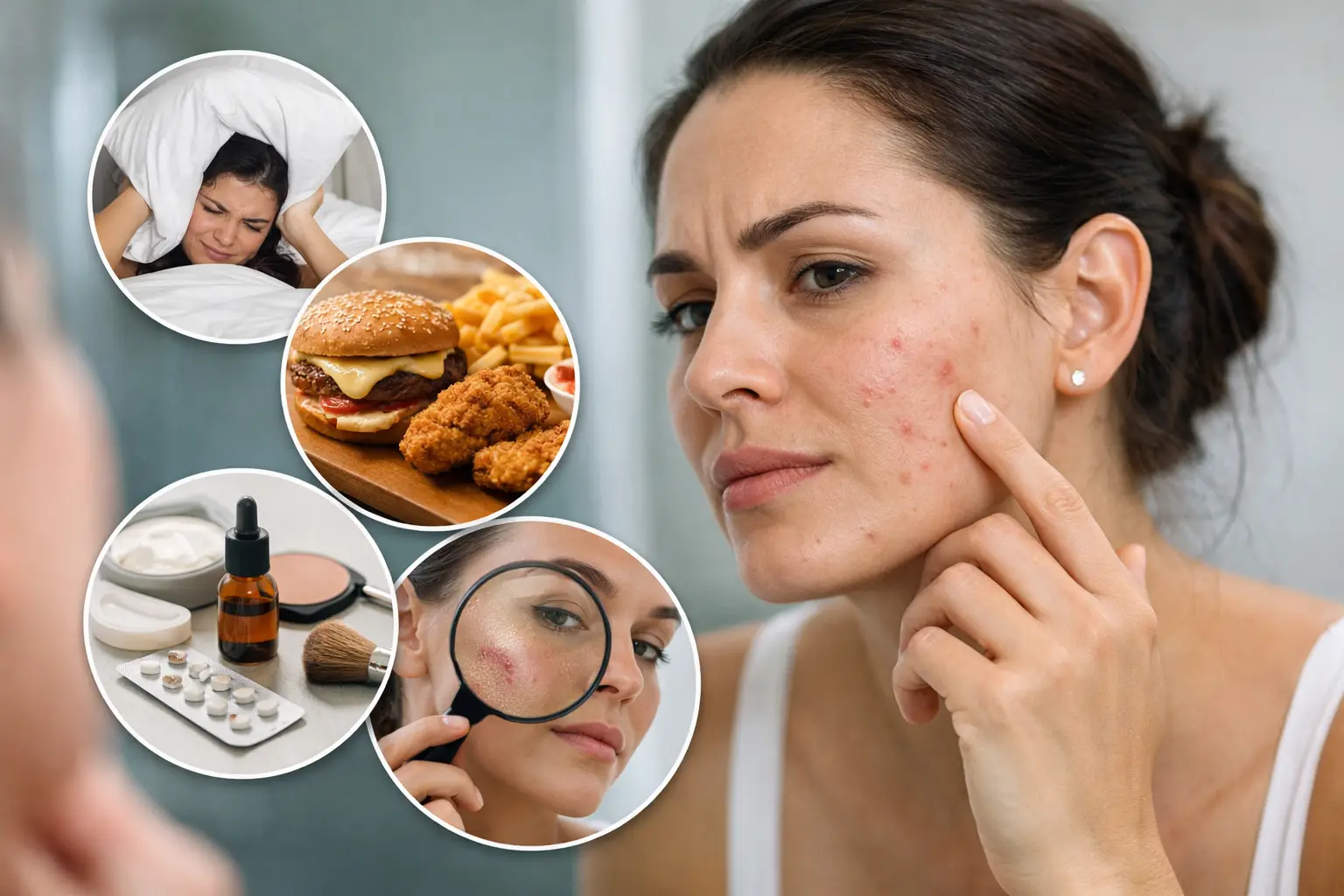
Adult acne can feel especially frustrating because most people expect breakouts to fade after the teen years. But the causes of acne in adults are often different, more layered, and sometimes tied to everyday habits, hormones, or underlying health issues that are easy to miss.
Acne happens when pores become clogged with oil, dead skin cells, and bacteria. In adults, that process is often pushed along by internal triggers as much as by what is happening on the surface of the skin. That is why one person can follow a careful skin care routine and still keep breaking out.
Common Causes of Acne in Adults
Hormones are one of the biggest reasons adult acne shows up or sticks around. Many women notice breakouts around the jawline, chin, and lower cheeks before their period, during pregnancy, or in perimenopause. These shifts can increase oil production and make pores more likely to clog. Conditions such as polycystic ovary syndrome, or PCOS, can also play a role.
Stress is another major trigger. It does not directly create acne on its own, but it can raise stress hormones that encourage more oil production and inflammation. Stress can also lead to poor sleep, more skin picking, and changes in eating habits, which may make breakouts worse.
Genetics matter more than many people realize. If your parents had persistent acne as adults, your skin may be more prone to it too. This does not mean breakouts are unavoidable, but it can explain why some adults deal with acne despite doing many things right.
Skin Care and Lifestyle Triggers
Sometimes the problem is not a lack of skin care, but the wrong kind. Heavy creams, oily makeup, pore-clogging sunscreens, and harsh exfoliants can all contribute. Overwashing is a common mistake. When skin gets stripped and irritated, it may produce even more oil, making the cycle worse instead of better.
Hair products can also be a hidden cause. Oils, pomades, and styling creams may transfer to the forehead, temples, and pillowcase, leading to breakouts in those areas. This is especially common when acne clusters near the hairline.
Sweat and friction can add to the problem too. Tight hats, helmets, face masks, workout clothing, and even constantly touching the face can irritate the skin and trap oil and bacteria. This type of acne is sometimes called acne mechanica.
Can Diet Cause Adult Acne?
Diet is not the only answer, but for some people it is part of the picture. Research suggests that high-glycemic foods, such as sugary snacks, white bread, and sweet drinks, may worsen acne in certain individuals by affecting insulin and hormone activity. Some people also notice more breakouts with dairy, especially skim milk.
That said, diet triggers are not universal. A food that affects one person may not affect another at all. If you suspect a pattern, it can help to track breakouts alongside meals rather than cutting out major food groups too quickly.
Medications and Health Conditions
Certain medications can trigger or worsen acne. Steroids, some forms of birth control, testosterone, lithium, and a few anti-seizure medications are known examples. If breakouts started after a medication change, that timing is worth paying attention to.
Underlying health issues may also show up through the skin. Hormonal disorders, insulin resistance, and chronic inflammation can all influence acne. In some cases, what looks like acne may actually be rosacea, folliculitis, or another skin condition that needs a different approach.
When Adult Acne May Need Medical Attention
Not all acne is mild. Deep, painful cysts, scarring, sudden severe breakouts, or acne paired with irregular periods, facial hair growth, or hair thinning can signal a hormonal issue worth checking out. Adult acne that does not improve with over-the-counter products may also need a professional evaluation.
This matters because treating the wrong cause can waste time and irritate the skin more. For example, if your breakouts are driven by hormones, a basic face wash alone may not do much. If harsh products are the real trigger, adding more acne treatments can backfire.
What Actually Helps
The best first step is to look for patterns. Where are the breakouts? When did they start? Did they appear after stress, a new product, a medication, or changes in your cycle? That kind of simple detective work can be more useful than chasing every trending skin care product.
A gentle routine usually works better than an aggressive one. Non-comedogenic products, regular cleansing, clean pillowcases, and hands off the face are good basics. Some people also find that stress management, better sleep, and a lower-sugar diet help calm their skin over time.
Adult acne is common, but it is not random. Once you understand what may be driving it, from hormones to hidden product triggers, it becomes much easier to make choices that support clearer, calmer skin.

