
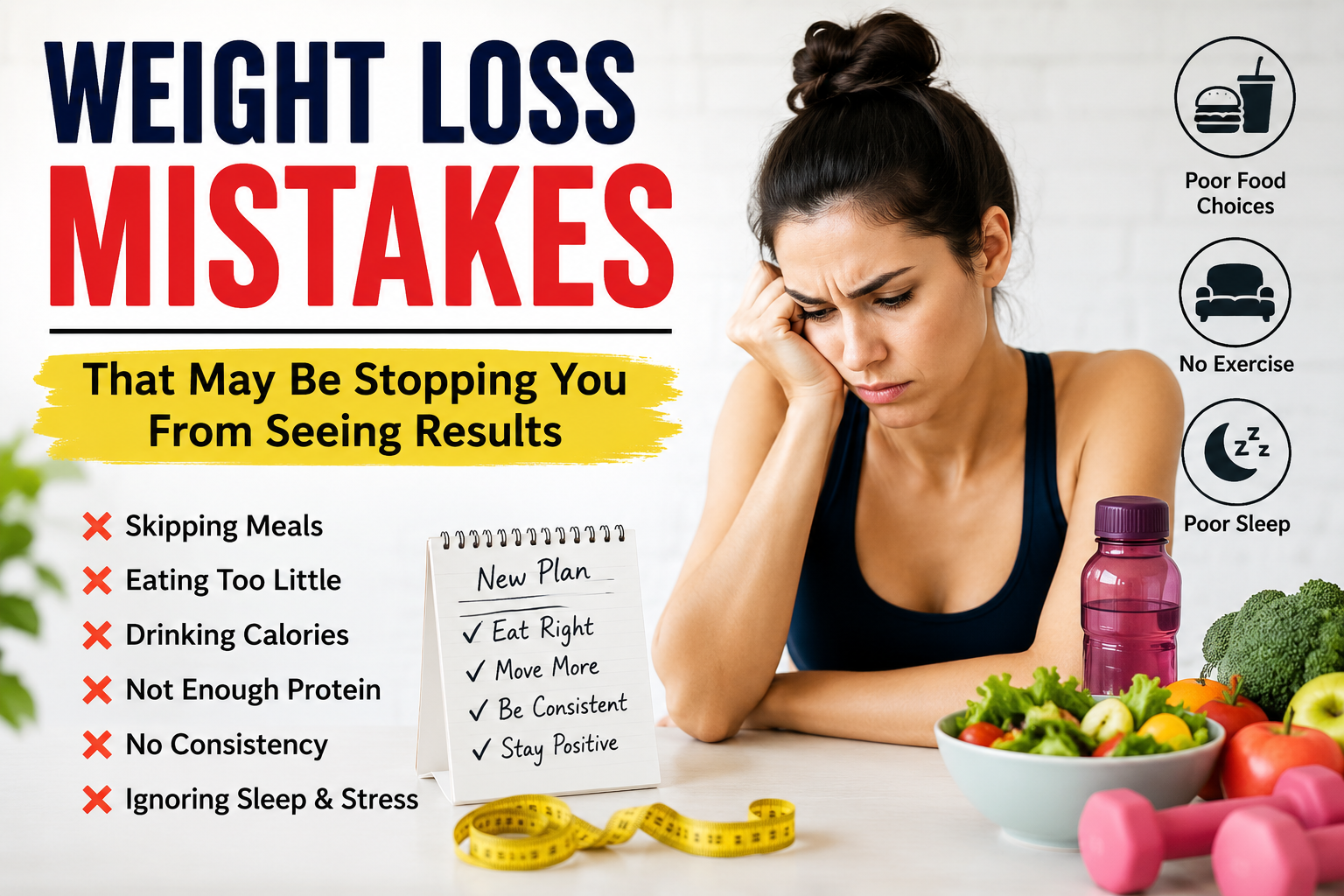
Losing weight sounds simple on paper:
“Eat less, move more.”
But anyone who has actually tried to lose weight knows it’s rarely that easy.
You can spend weeks eating salads, cutting calories, doing workouts, and still feel stuck staring at the same number on the scale. That’s frustrating—and honestly, it’s one reason many people give up too soon.
The truth is, sometimes it’s not about working harder. It’s about avoiding the common mistakes that quietly slow your progress without you realizing it.
If your weight loss journey feels harder than it should, you might be making one (or several) of these very common mistakes.
Let’s break them down in a real, practical way.
1. Skipping Meals to “Save Calories”
A lot of people think:
“If I skip breakfast or lunch, I’ll lose weight faster.”
But this often backfires.
When you go too long without eating:
- Your energy drops
- Hunger gets intense
- Cravings increase
- You’re more likely to overeat later
Research from the Cleveland Clinic explains that skipping meals can lead to poor appetite control and unhealthy eating patterns.
🔗 https://health.clevelandclinic.org/is-skipping-meals-bad-for-you
Instead of starving yourself, focus on balanced meals that keep you full longer.
2. Drinking Your Calories Without Realizing It
This one surprises many people.
You may be eating “healthy” while still drinking:
- Sugary coffee drinks
- Soda
- Sweet tea
- Alcohol
- Juice
- Energy drinks
Liquid calories add up fast because they usually don’t make you feel full.
According to the Harvard T.H. Chan School of Public Health, sugary drinks are strongly linked to weight gain and obesity.
🔗 https://www.hsph.harvard.edu/nutritionsource/healthy-drinks
Sometimes changing what you drink creates faster results than changing your meals.
3. Expecting Fast Results
One of the biggest mistakes in weight loss is expecting your body to transform in two weeks.
Social media has made people believe:
- Weight loss should be dramatic
- Progress should be fast
- Every week should show change
Real weight loss is slower than most people expect.
The CDC recommends losing about 1–2 pounds per week for sustainable results.
🔗 https://www.cdc.gov/healthy-weight-growth/losing-weight
Slow progress is still progress.
4. Cutting Too Many Calories
Eating too little can actually work against you.
Extreme dieting often leads to:
- Constant hunger
- Low energy
- Muscle loss
- Slower metabolism
- Binge eating later
Your body needs fuel to function properly.
Weight loss should feel manageable—not like punishment.
5. Only Focusing on the Scale
The scale doesn’t tell the whole story.
You may:
- Lose fat but gain muscle
- Hold water weight
- Look leaner without huge scale changes
Instead of obsessing over numbers, also pay attention to:
- Energy levels
- Clothes fitting differently
- Better sleep
- Improved confidence
- Strength gains
Health is bigger than one number.
6. Not Eating Enough Protein
Protein matters more than many people realize.
It helps:
- Keep you full longer
- Protect muscle while losing fat
- Reduce cravings
- Support metabolism
According to research published by the National Institutes of Health (NIH), higher protein intake may help improve weight management.
🔗 https://www.ncbi.nlm.nih.gov/pmc/articles/PMC7539343
Good protein sources include:
- Eggs
- Chicken
- Fish
- Greek yogurt
- Beans
- Tofu
7. Doing Exercise You Hate
If you hate your workouts, you probably won’t stick with them.
You do NOT need:
- Extreme workouts
- Two-hour gym sessions
- Punishing cardio
Walking, dancing, swimming, cycling, or home workouts all count.
Consistency beats intensity every time.
The best workout is the one you’ll actually keep doing.
8. Thinking “Healthy” Foods Have Unlimited Calories
Healthy foods are great—but calories still matter.
Foods like:
- Nuts
- Peanut butter
- Granola
- Smoothies
- Avocados
are nutritious, but easy to overeat.
Portion awareness matters, even with healthy foods.
9. Poor Sleep Habits
Sleep and weight loss are deeply connected.
Lack of sleep affects hormones that control:
- Hunger
- Cravings
- Appetite
- Energy
According to the Mayo Clinic, poor sleep can increase hunger and make weight management harder.
🔗 https://www.mayoclinic.org/healthy-lifestyle/adult-health/in-depth/sleep/art-20048379
Sometimes improving sleep helps more than adding another workout.
10. Being Too Strict With Your Diet
Many people try to be “perfect.”
They cut out:
- Bread
- Dessert
- Pasta
- Snacks
- Social events
At first it works…
until they burn out.
Overly strict dieting often leads to:
- Binge eating
- Guilt
- Quitting completely
A sustainable approach works better long term.
You can still enjoy your favorite foods occasionally and lose weight.
11. Comparing Yourself to Other People
This one quietly destroys motivation.
Your body is different.
Your lifestyle is different.
Your genetics are different.
Comparing your progress to influencers or friends can make you feel like you’re failing—even when you’re doing well.
Focus on YOUR progress.
Not someone else’s highlight reel.
12. Ignoring Stress and Emotional Eating
Sometimes weight gain has less to do with food and more to do with emotions.
Stress can trigger:
- Cravings
- Emotional eating
- Late-night snacking
- Loss of motivation
According to the American Psychological Association (APA), stress can strongly influence eating behaviors.
🔗 https://www.apa.org/topics/stress/body
Managing stress through:
- Walking
- Journaling
- Therapy
- Meditation
- Better routines
can help more than another crash diet.
Final Thoughts
Weight loss is not about being perfect.
It’s about building habits you can actually live with.
Most people fail not because they’re lazy—but because they follow unrealistic advice that’s impossible to maintain.
If you recognize some of these mistakes, don’t panic. Almost everyone makes them at some point.
Small changes done consistently usually beat extreme changes done briefly.
Your goal shouldn’t just be losing weight.
Your goal should be building a healthier lifestyle you can maintain for years.
And that takes patience.
Frequently Asked Questions (FAQ)
What is the biggest mistake when trying to lose weight?
One of the biggest mistakes is trying to lose weight too quickly through extreme dieting or unsustainable habits.
Why am I exercising but not losing weight?
Possible reasons include overeating healthy foods, lack of sleep, stress, water retention, or gaining muscle while losing fat.
Can skipping meals slow weight loss?
Yes. Skipping meals may increase hunger and cravings later, leading to overeating.
How important is sleep for weight loss?
Very important. Poor sleep affects hunger hormones and energy levels, making weight management harder.

