
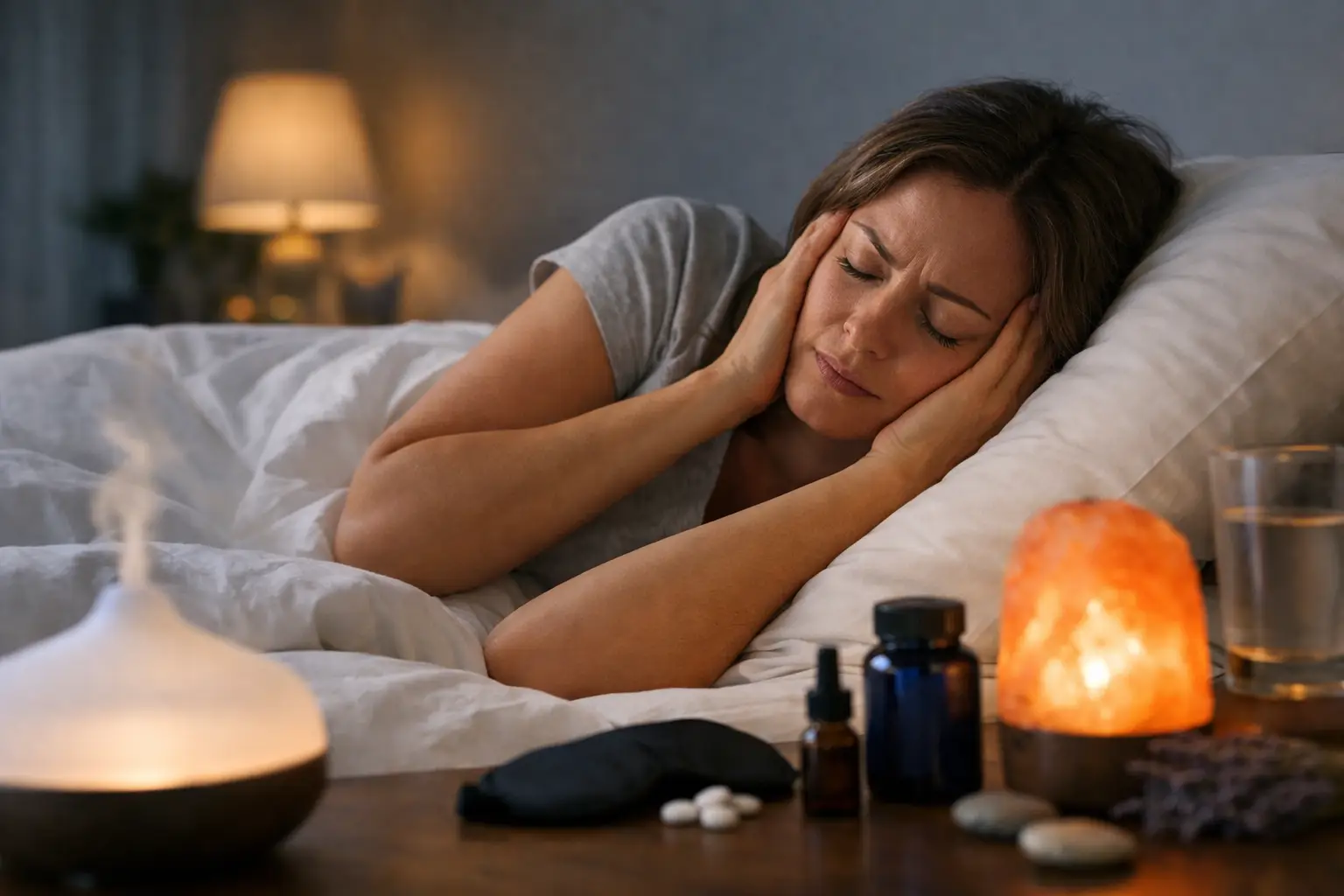
If your body feels tired but your mind refuses to power down, you are not alone. Sleep anxiety remedies can help when bedtime starts to feel like a nightly battle instead of a chance to rest.
Sleep anxiety usually shows up as worry about not sleeping, stress that gets louder when the room gets quiet, or a cycle where one bad night makes you dread the next one. The frustrating part is that the harder you try to force sleep, the more alert you can feel. That is why the best remedies focus less on “trying harder” and more on calming your nervous system.
Why sleep anxiety gets worse at night
During the day, your brain has distractions. At night, there is less noise, less movement, and more room for racing thoughts. That can make normal stress feel bigger. Some people replay conversations, worry about work, or start clock-watching and calculating how little sleep they might get.
Your body can join in too. A faster heartbeat, tight chest, upset stomach, or restless muscles can all make you feel like something is wrong, even when the real issue is anxiety. Once that pattern repeats, your bed itself can start to feel like a trigger.
Sleep anxiety remedies that calm mind and body
One of the most effective changes is keeping a consistent wind-down routine. When you do the same few calming things every night, your brain starts to connect those actions with sleep. That might mean dimming the lights, putting your phone away, washing your face, drinking a caffeine-free herbal tea, or reading a few pages of a light book. The routine does not need to be long. It just needs to be regular.
Another strong remedy is cutting off stimulating content before bed. News alerts, social media scrolling, work emails, and intense TV can all keep your brain activated. If you already deal with nighttime worry, even 30 to 60 minutes away from screens can make a difference. Some people notice this change within a few nights.
Breathing exercises can also help, especially when anxiety feels physical. Slow breathing tells your body that it is safe enough to relax. Try inhaling gently through your nose for four seconds, then exhaling for six. The longer exhale matters because it helps reduce that keyed-up feeling. If counting makes you more alert, just focus on breathing out slowly.
Progressive muscle relaxation is another useful option. Tense one muscle group at a time, then release it. Start at your feet and work upward, or begin with your shoulders and hands if that is where you hold stress. This works well for people who feel tired but physically wound up.
A simple brain dump can help when thoughts keep circling. Before bed, write down what is on your mind, along with anything you need to remember tomorrow. This does not solve every problem, but it gives your brain a place to put unfinished thoughts so it does not keep carrying them into bed.
Natural support for sleep anxiety
For readers who prefer a natural wellness approach, gentle herbal support may help some people relax before bed. Chamomile, lemon balm, lavender, and passionflower are commonly used for evening calm. These are not magic fixes, and they do not work the same way for everyone, but they can fit nicely into a bedtime routine.
That said, natural does not always mean risk-free. Herbs can interact with medications, and some products vary in quality. If you are pregnant, breastfeeding, managing a medical condition, or taking prescription medicines, it is smart to check with a healthcare professional before adding herbal remedies.
Magnesium is another popular option, especially when stress comes with muscle tension. Some people find it helpful, while others do not notice much. That is common with supplements in general. If one approach is not helping after a fair trial, it may not be the right fit for your body.
Habits that can quietly make anxiety worse
Caffeine late in the day is a big one. Even if you feel like coffee does not affect you, it can still make sleep lighter or make it harder to fully settle down. Alcohol can also backfire. It may make you sleepy at first, but it often leads to more restless sleep later in the night.
Trying to “catch up” with very long naps can make nighttime sleep anxiety worse too. A short daytime nap may be fine for some people, but sleeping too long in the afternoon can reduce your natural sleep drive at night.
Then there is clock-checking. It feels harmless, but it often feeds panic. Looking at the time turns insomnia into a math problem, and math is not relaxing at 2 a.m. If this is your habit, turn the clock away.
When to get out of bed
If you have been lying awake for what feels like a long time, it may help to get out of bed for a bit. Go somewhere dimly lit and do something quiet and boring until you feel sleepy again. This helps your brain reconnect the bed with sleep instead of frustration.
The goal is not to punish yourself for being awake. It is to break the cycle where your mind starts seeing bedtime as a place for stress.
When sleep anxiety needs extra help
If sleep anxiety is happening often, affecting your mood, or making daily life harder, it may be time to talk with a doctor or mental health professional. This is especially true if you snore heavily, gasp in sleep, have panic attacks, or think your anxiety may be part of a bigger issue.
Therapy, especially cognitive behavioral therapy for insomnia, can be very effective. Many people need more than a few bedtime tricks, and that is okay. The right support can change the pattern much faster than struggling through it alone.
Better sleep usually starts when you stop fighting the night and start giving your body steadier signals of safety, calm, and routine.

