
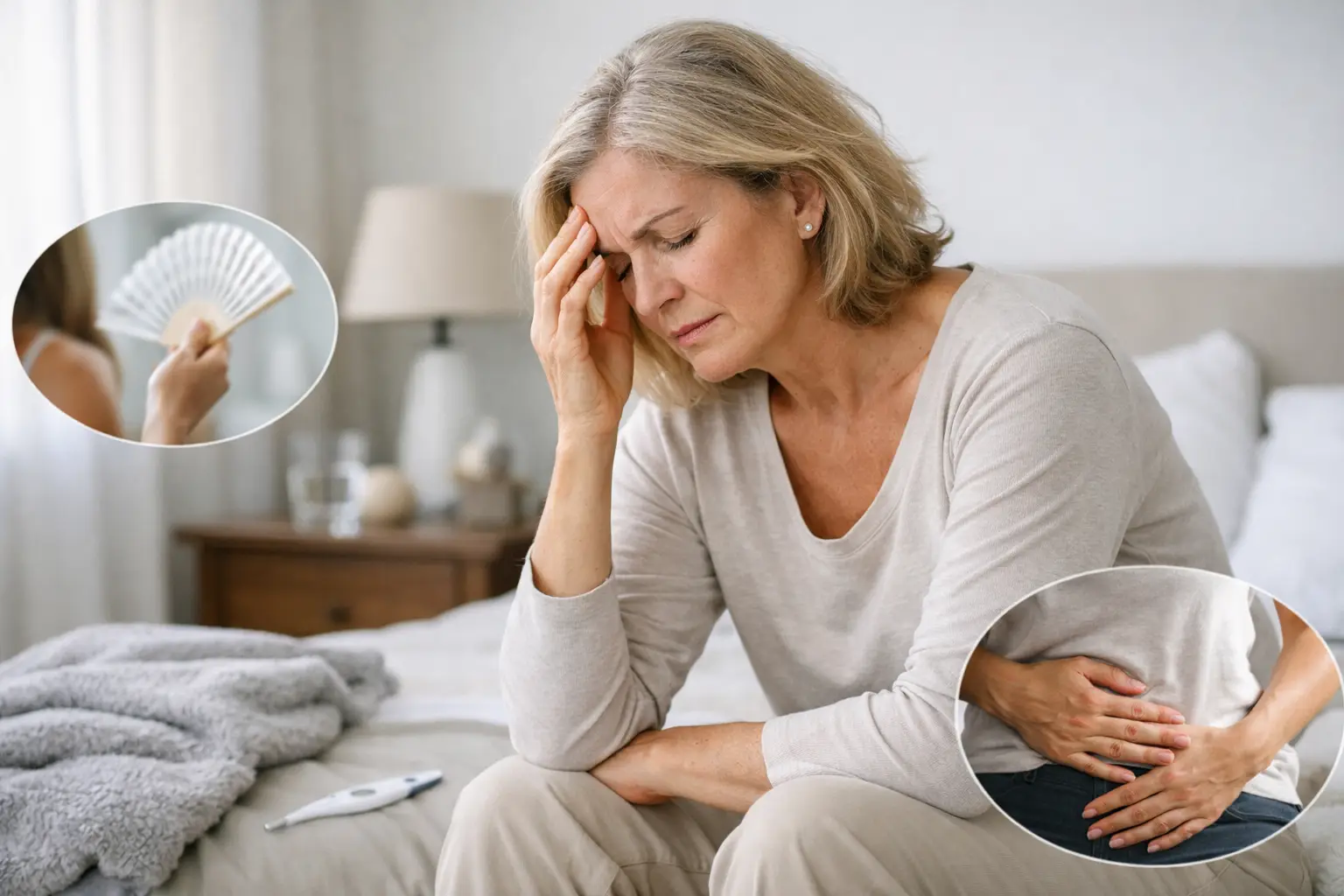
One day it is poor sleep. Then it is sudden sweating, brain fog, or periods that seem to have a mind of their own. Menopause symptoms can sneak up slowly or hit hard, and many women are left wondering what is normal and what deserves medical attention.
Menopause is not a disease. It is a natural stage of life that marks the end of menstrual cycles, usually between ages 45 and 55. The years leading up to it, called perimenopause, are often when symptoms are most noticeable because hormone levels start shifting in uneven ways.
Common menopause symptoms
The best-known symptom is the hot flash, but it is far from the only one. Many women notice a sudden wave of heat in the face, neck, and chest, often followed by sweating and chills. These episodes can last seconds or several minutes and may happen during the day or at night.
Sleep problems are also very common. Some women wake up drenched in sweat, while others simply cannot stay asleep or fall back asleep easily. Over time, poor sleep can make everything else feel worse, especially mood, focus, and energy.
Mood changes can show up as irritability, anxiety, low motivation, or feeling emotionally off balance. This does not mean every woman will feel depressed, but hormone changes can affect mental well-being in real ways. Brain fog is another complaint many people mention. It may feel like forgetfulness, trouble concentrating, or slower thinking than usual.
Periods often become irregular before they stop completely. They may come closer together, farther apart, or become lighter or heavier. Vaginal dryness, lower libido, and discomfort during sex are also common because estrogen levels decline. Some women also notice joint aches, headaches, weight gain around the midsection, dry skin, or heart palpitations.
Why menopause symptoms can feel so different
Not every woman experiences menopause the same way. Some have mild changes and move through this stage with little disruption. Others deal with symptoms that affect work, relationships, sleep, and daily comfort.
Part of the difference comes from genetics, overall health, stress levels, and lifestyle habits. Smoking, for example, is linked with earlier menopause and may worsen hot flashes. Poor sleep, high stress, and low physical activity can also make symptoms harder to manage. If menopause happens suddenly after surgery or certain medical treatments, symptoms may feel more intense because hormone levels drop quickly.
What can help ease symptoms
Small daily habits can make a real difference. Keeping the bedroom cool, dressing in layers, and limiting alcohol, spicy foods, or excess caffeine may help reduce hot flashes for some women. A regular sleep routine also matters. Going to bed at the same time, lowering screen use before bed, and avoiding heavy meals late at night can support better rest.
Exercise helps more than many people realize. Walking, strength training, yoga, and stretching can support mood, sleep, bone health, and weight management. Food choices matter too. A balanced diet with enough protein, fiber, calcium, and vitamin D can support the body during this transition.
Some women also explore herbal or natural wellness options for symptom support. That can include soy foods, flaxseed, black cohosh, or other plant-based approaches. These options may help some people, but they are not risk-free or equally effective for everyone. Herbs and supplements can interact with medications or may not be a good fit for people with certain health conditions, so it is smart to check with a healthcare professional before starting anything new.
For women with more disruptive symptoms, medical treatment may be worth discussing. Hormone therapy can be very effective for hot flashes, night sweats, and vaginal dryness, but it is not the right choice for every person. The best option depends on age, health history, symptom severity, and personal preferences.
When menopause symptoms are not something to brush off
Some changes are common, but some deserve a closer look. Heavy bleeding, bleeding after sex, or bleeding that returns after menopause should be evaluated. Chest pain, severe depression, frequent heart palpitations, or major sleep loss that affects daily life also should not be ignored.
It is also worth speaking with a doctor if symptoms are interfering with work, relationships, or emotional health. Many women try to push through because they assume this stage just has to be miserable. It does not. Help is available, and support can be tailored to your symptoms and health needs.
Menopause symptoms and long-term health
Menopause is not only about hot flashes. Lower estrogen levels can also affect bone density and heart health over time. That is one reason this stage is a good time to pay attention to preventive care, including exercise, blood pressure, cholesterol, and bone health habits.
If you are noticing changes and wondering whether menopause is the cause, tracking symptoms can help. Write down sleep issues, cycle changes, mood shifts, hot flashes, and anything else unusual. Patterns make it easier to have a productive conversation with your healthcare provider and figure out what support makes sense.
Menopause can feel confusing, but it is also a chance to understand your body in a new way and give it the care it has likely been asking for.

