
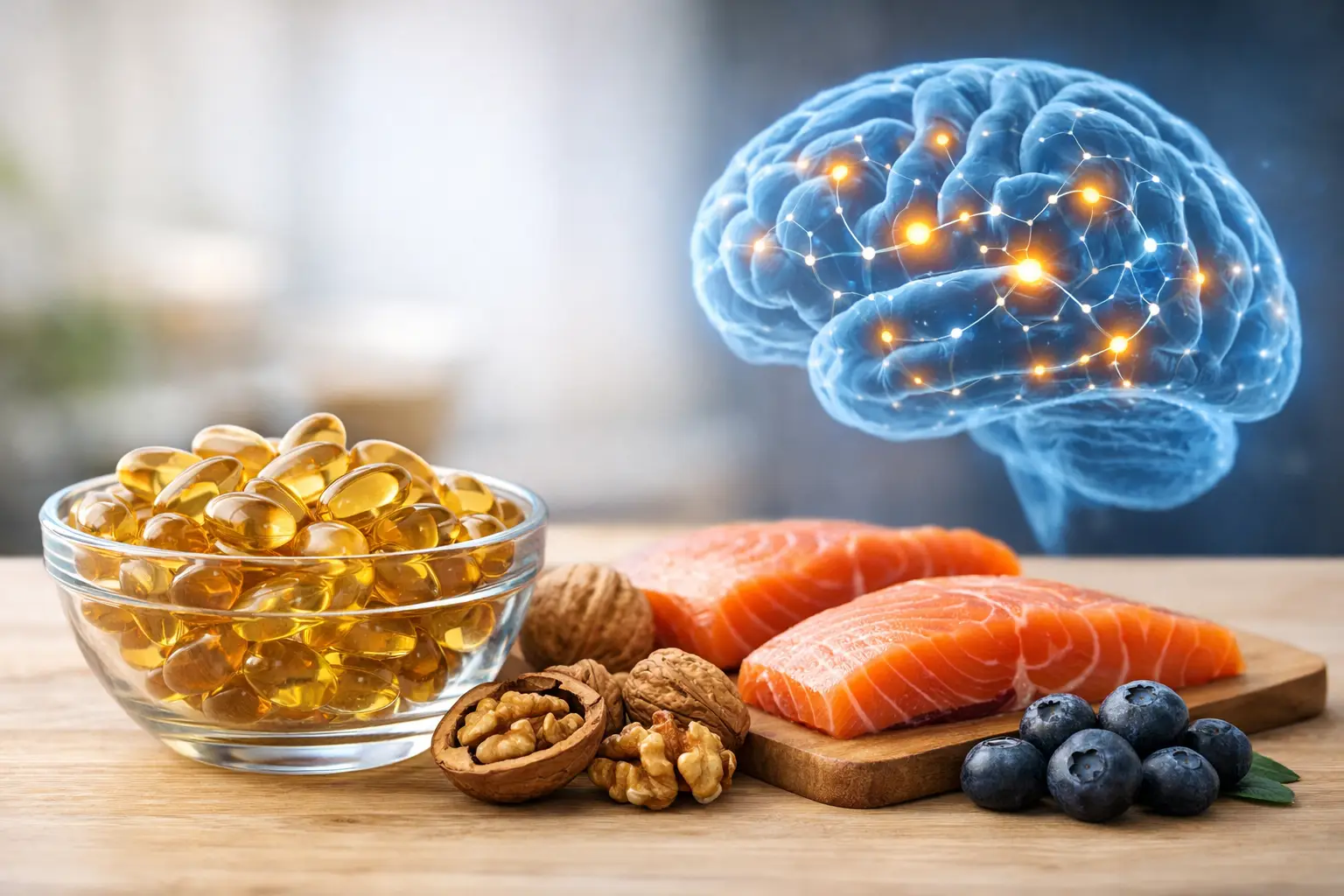
Your brain is nearly 60% fat by dry weight, so the kind of fat you eat matters more than many people realize. That is why the benefits of omega-3 for brain health get so much attention. These essential fats help build brain cells, support communication between neurons, and may play a role in memory, mood, and healthy aging.
Omega-3s are a group of polyunsaturated fats, but the three names you will hear most often are ALA, EPA, and DHA. ALA is found mostly in plant foods like flaxseed, chia seeds, and walnuts. EPA and DHA are found mainly in fatty fish and algae, and these are the forms most closely tied to brain function. DHA, in particular, is a major structural fat in the brain.
Why omega-3 matters for the brain
Think of DHA as part of the brain’s physical framework. It helps keep cell membranes flexible, which makes it easier for brain cells to send and receive signals. When those membranes are in better shape, communication inside the brain tends to work more efficiently.
EPA seems to play a slightly different role. It is often linked with inflammation balance and mood regulation. Since chronic inflammation may affect brain health over time, this matters more than it sounds. The brain is not just about memory and concentration. It is also tied closely to emotional well-being.
Benefits of omega-3 for brain function
One of the biggest reasons people look into omega-3 is memory support. Some research suggests that getting enough DHA and EPA may help maintain normal cognitive function, especially as people get older. That does not mean omega-3 is a cure for dementia or Alzheimer’s disease, but it may be one helpful piece of a broader brain-healthy lifestyle.
Focus and mental performance may also benefit. If your diet is low in omega-3, improving it could support attention, processing speed, and overall mental sharpness. The effect is not usually dramatic overnight, like drinking coffee, but it may contribute to steadier brain function over time.
Mood is another area worth paying attention to. Some studies have found that people with low omega-3 intake may be more likely to struggle with low mood. EPA has been studied for its possible role in supporting emotional balance, though results are mixed and not everyone responds the same way. Omega-3 should never replace mental health care, but it may complement a healthy routine.
Omega-3 and brain health across life stages
Omega-3 is important long before old age. During pregnancy and early childhood, DHA supports brain and eye development. That is one reason prenatal nutrition often includes attention to omega-3 intake.
In adults, the conversation often shifts toward productivity, stress, and memory. A diet that includes enough omega-3 may help support daily cognitive demands, especially if meals are otherwise heavy in ultra-processed foods and low in nutrient-dense options.
For older adults, omega-3 becomes part of the healthy aging conversation. It may help preserve brain structure and function, although the benefit can depend on factors like overall diet, genetics, medical conditions, and whether a person already has a deficiency.
Best food sources of omega-3
If you want brain-friendly omega-3, fatty fish is still one of the strongest options. Salmon, sardines, mackerel, herring, and trout are all rich in EPA and DHA. For people who do not eat fish, algae-based supplements can provide DHA and sometimes EPA as a plant-based alternative.
Plant foods still matter, even though ALA is not converted very efficiently into DHA and EPA. Flaxseeds, chia seeds, hemp seeds, and walnuts are smart additions to a balanced diet. They bring other nutrients and can help improve your overall fat quality.
Should you take a supplement?
It depends. If you rarely eat fish, a supplement may be worth discussing with your healthcare provider. This can be especially relevant for pregnant women, older adults, or people who want a more reliable intake of DHA and EPA.
Still, more is not always better. Omega-3 supplements can interact with certain medications, including blood thinners, and high doses may not be appropriate for everyone. Quality also matters. Some products are better tested for purity and freshness than others.
A few limits to keep in mind
Omega-3 has real promise, but it is not magic. It cannot cancel out chronic sleep loss, constant stress, smoking, or a diet loaded with added sugar and highly processed foods. Brain health is built from many daily habits, including exercise, blood sugar control, sleep, and social connection.
It is also easy to oversimplify the science. Some studies show clear benefits, while others find only modest effects. That does not mean omega-3 is useless. It means brain health is complicated, and nutrients tend to work best as part of a full lifestyle pattern, not as a quick fix.
If you want a practical place to start, aim to eat fatty fish a couple of times a week, add seeds or walnuts to meals, and talk with your doctor if you think a supplement makes sense. Small nutrition changes can add up, and your brain is one of the best reasons to make them.

