
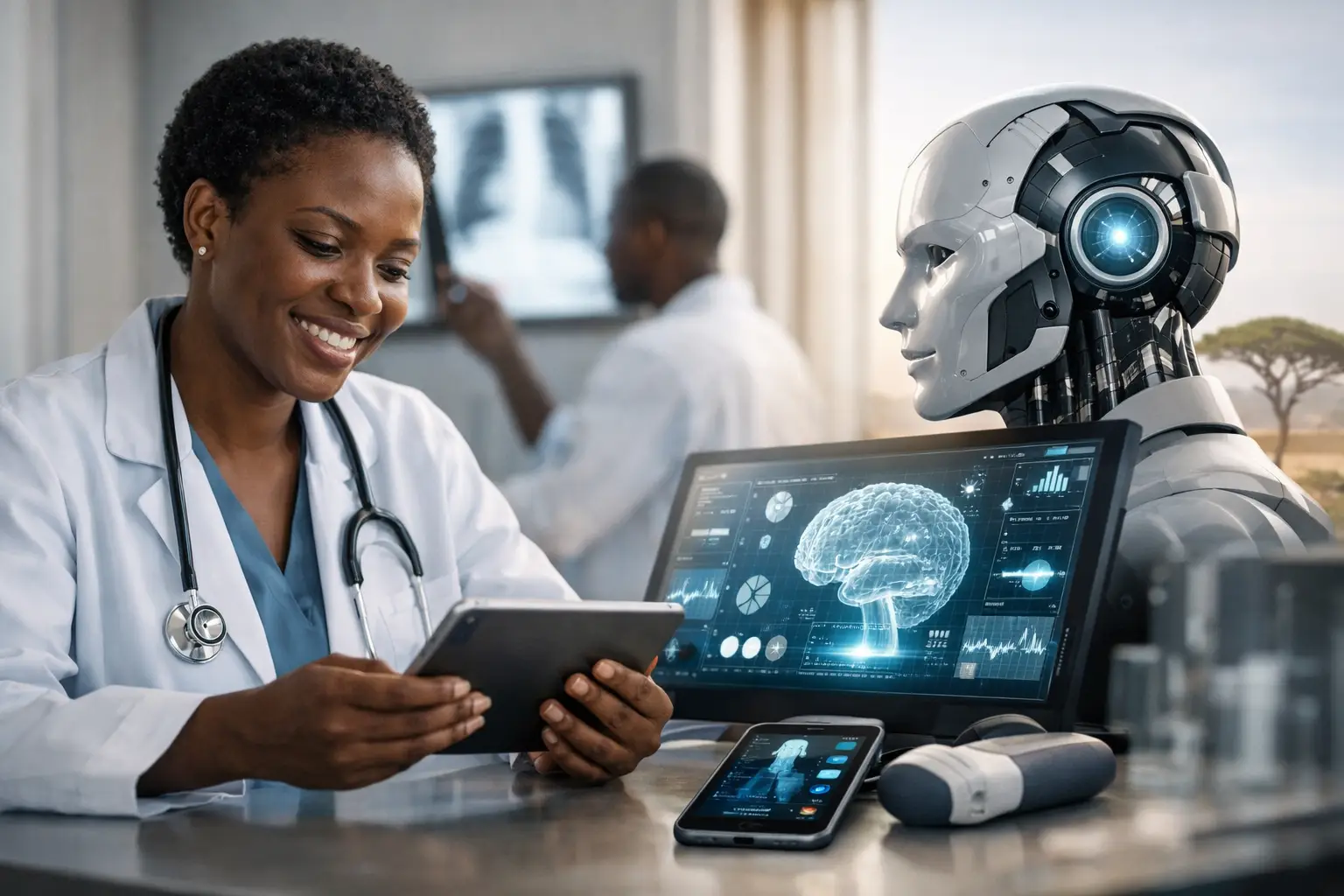
A missed diagnosis in a rural clinic can change a life. That is why AI healthcare tools for Africa are getting so much attention. In places where doctors, lab equipment, and specialist care may be limited, the right digital tool can help health workers move faster, spot problems earlier, and reach more people.
But the big promise needs a reality check. AI is not a magic fix for weak health systems, medicine shortages, or poor internet access. What it can do, when designed well, is support frontline care in very practical ways.
Where AI healthcare tools for Africa can help most
The strongest use cases are usually not flashy. They solve everyday problems that already slow care down.
One major area is early screening and triage. AI-based symptom checkers and decision-support apps can help community health workers ask better questions, flag danger signs, and decide who needs urgent referral. That matters in areas where one nurse may be caring for dozens of patients and a doctor is hours away.
Another high-impact area is imaging and diagnosis. Some AI tools can help interpret chest X-rays, ultrasound scans, retinal images, or skin photos. In countries where radiologists and specialists are scarce, this can reduce delays. It does not replace a trained clinician, but it can give a second layer of support, especially for tuberculosis, pneumonia, diabetic eye disease, and maternal health monitoring.
AI also shows promise in follow-up care. Tools that send reminders, track symptoms, or predict which patients are likely to miss appointments can help manage chronic conditions like diabetes, high blood pressure, and HIV. For patients, that can mean fewer gaps in treatment. For clinics, it can mean better use of limited staff time.
The tools people talk about most
Most AI healthcare tools for Africa fall into a few practical categories.
Decision-support tools help health workers assess symptoms and next steps. Diagnostic AI supports image reading or pattern recognition from medical data. Chat-based tools can answer common health questions in plain language, sometimes in local languages. Predictive systems help clinics spot outbreaks, medicine demand, or patient drop-off risk.
There is also growing interest in mobile-first AI. That makes sense because smartphones are often easier to scale than expensive hospital systems. A lightweight app that works offline or with weak connectivity may be far more useful than a powerful platform that only works in well-funded urban hospitals.
What makes a tool useful, not just impressive
A tool can sound advanced and still fail in real life. For everyday healthcare settings, usefulness depends on a few basic things.
First, it has to match local conditions. If an AI tool was trained mostly on data from Europe or North America, it may perform poorly in African populations. Differences in disease patterns, skin tone, language, nutrition, and health records all matter. A breast health screening tool, for example, needs testing in the population it will serve. Otherwise, accuracy claims may look better on paper than in a clinic.
Second, it has to work where resources are limited. That means low data use, simple interfaces, battery efficiency, and offline options. A complicated dashboard is not helpful if a community health worker needs quick answers during a home visit.
Third, trust matters. Patients and providers need to know what the tool is doing and when human judgment comes first. If an app gives advice but cannot explain its reasoning, many clinicians will use it cautiously, and they should.
The biggest limits to keep in mind
There is real potential here, but there are also real risks.
Data privacy is a major one. Health information is sensitive, and weak safeguards can put patients at risk. Any tool collecting symptoms, photos, or treatment history needs strong protection and clear consent.
Bias is another concern. AI can miss conditions or over-call problems if the training data is narrow or low quality. In healthcare, those mistakes are not minor. They affect treatment, anxiety, cost, and outcomes.
Then there is the infrastructure problem. AI cannot fix stockouts, broken referral systems, or clinics with no power. It can support care, but it cannot stand in for public health investment, trained staff, and reliable supplies.
What readers should watch for as this space grows
For consumers, caregivers, and health-conscious readers, the smart question is not whether AI sounds exciting. It is whether a tool is safe, tested, and actually useful.
Look for plain-language explanations of what the tool does. Ask whether it supports a healthcare worker or tries to replace one. Be cautious with apps that make bold promises without showing limits. And remember that digital health works best as a helper, not as the whole answer.
At Herbafama, that same rule applies across wellness topics too. Good tools can support better choices, but they do not replace medical evaluation, healthy habits, or common sense.
The future of healthcare in Africa will not be built by AI alone. Still, if these tools are local, affordable, and designed around real clinic needs, they could make everyday care faster, earlier, and more reachable for the people who need it most.

