
If your body feels puffy, achy, tired, or just off more often than it should, inflammation may be part of the picture. Anti-inflammatory foods will not cure every health problem, but they can support your body in a very real way, especially when your usual meals are heavy on sugar, refined carbs, and ultra-processed snacks.
Inflammation is not always bad. Your immune system uses it to protect you after an injury or infection. The problem starts when low-grade inflammation sticks around for weeks, months, or years. That kind of chronic inflammation has been linked to heart disease, type 2 diabetes, arthritis, digestive issues, and other long-term health concerns.
What are anti-inflammatory foods?
Anti-inflammatory foods are foods that tend to calm harmful, ongoing inflammation rather than feed it. In plain terms, these are usually whole or minimally processed foods packed with nutrients your body uses to repair itself. Think fiber, antioxidants, healthy fats, vitamins, minerals, and plant compounds.
This does not mean one berry bowl or one turmeric tea will suddenly erase inflammation. Food works more like a pattern than a quick fix. What you eat most days matters more than any single ingredient labeled as a superfood.
Anti-inflammatory foods to put on your plate
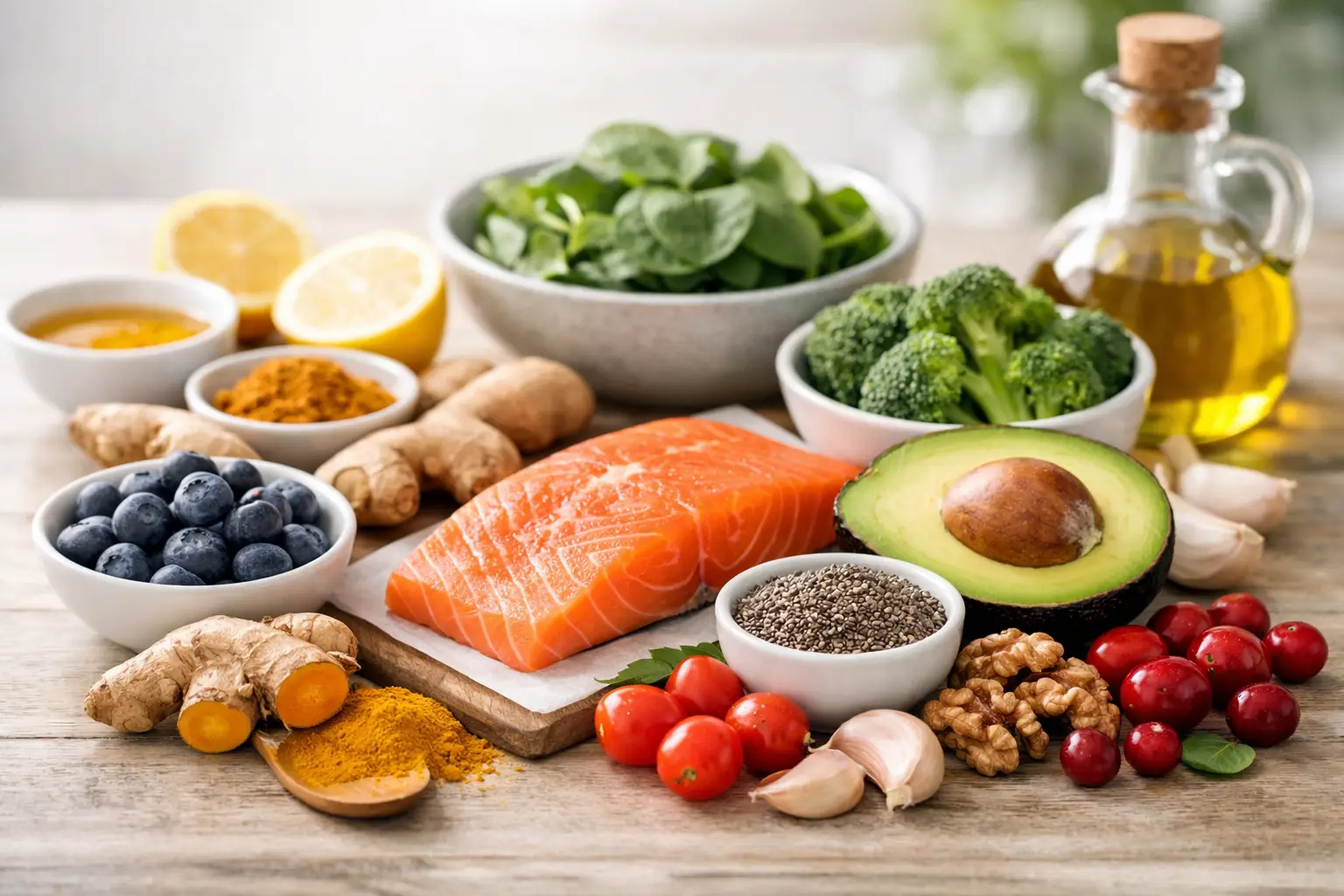
Some foods show up again and again in research and healthy eating plans for a reason. Fatty fish like salmon, sardines, and mackerel provide omega-3 fats, which may help reduce inflammatory signals in the body. If you do not eat fish, walnuts, chia seeds, and flaxseeds are helpful plant-based options, though they work a bit differently.
Berries, cherries, oranges, and grapes offer antioxidants that help protect cells from damage. Leafy greens like spinach, kale, and arugula bring fiber, folate, and a range of plant nutrients. Broccoli, Brussels sprouts, and cauliflower are also strong choices if you want vegetables with extra nutritional punch.
Olive oil is one of the simplest upgrades for many people. Swapping it in for heavily refined oils or butter in some meals can support a more anti-inflammatory eating pattern. Avocados, nuts, and seeds also provide healthy fats that fit well into this approach.
Beans, lentils, oats, and whole grains deserve more attention than they usually get. They are rich in fiber, which helps support gut health. That matters because your gut and your immune system are closely connected. A healthier gut environment may help reduce inflammation over time.
Herbs and spices can help too. Turmeric, ginger, garlic, cinnamon, and rosemary all contain compounds that may support the body’s natural defenses. They are not magic, but they are easy to add to soups, eggs, roasted vegetables, smoothies, and teas.
Foods that can push inflammation higher
Knowing what to eat more often helps, but so does knowing what may work against you. Diets high in sugary drinks, desserts, white bread, fried foods, processed meats, and heavily packaged snack foods are often linked with higher inflammation. These foods are easy to overeat and usually low in the fiber and nutrients your body needs.
That said, you do not need a perfect diet to make progress. If you enjoy pizza or dessert sometimes, that does not cancel out a healthy lifestyle. The bigger issue is your overall pattern. Most people do better when they focus on adding better foods first instead of obsessing over every restriction.
How to build a simple anti-inflammatory meal
A good rule is to build your plate around color, fiber, and healthy fat. Start with vegetables or fruit, add a protein source, then include a whole-food carb or healthy fat. This can be as simple as oatmeal with berries and walnuts, grilled salmon with brown rice and broccoli, or a bean bowl with greens, avocado, and olive oil.
If your schedule is packed, keep it realistic. Frozen berries, canned beans, plain oats, bagged greens, olive oil, yogurt, and nuts can make quick meals easier. Convenience matters because the best eating plan is the one you can actually follow.
Do anti-inflammatory foods really work?
They can help, but results depend on the person and the bigger picture. If you are dealing with poor sleep, chronic stress, smoking, low activity, or an untreated health condition, food alone may not be enough. Inflammation is influenced by more than diet.
Still, eating this way can be a smart foundation. Some people notice less bloating, more stable energy, fewer cravings, or improved digestion within a few weeks. Others see slower changes. If you have a condition like arthritis, diabetes, inflammatory bowel disease, or heart disease, this style of eating may support your medical treatment, not replace it.
A few smart cautions before you overhaul your diet
Not every healthy food works for every body. Some people do poorly with certain high-fiber foods, dairy, gluten, nightshades, or specific herbs and spices. If a food is considered healthy but makes you feel worse, pay attention.
It is also worth being careful with supplements marketed for inflammation. Food is usually the safer first step for general wellness. If you take blood thinners, diabetes medication, or have a chronic medical condition, ask a healthcare professional before using concentrated herbal products or making major diet changes.
A simple place to start is this: eat more fish or plant omega-3s, add vegetables and berries more often, choose olive oil over heavily processed fats when you can, and cut back on the sugary and ultra-processed foods that keep showing up every day. Small changes done consistently tend to beat big health promises every time.

