
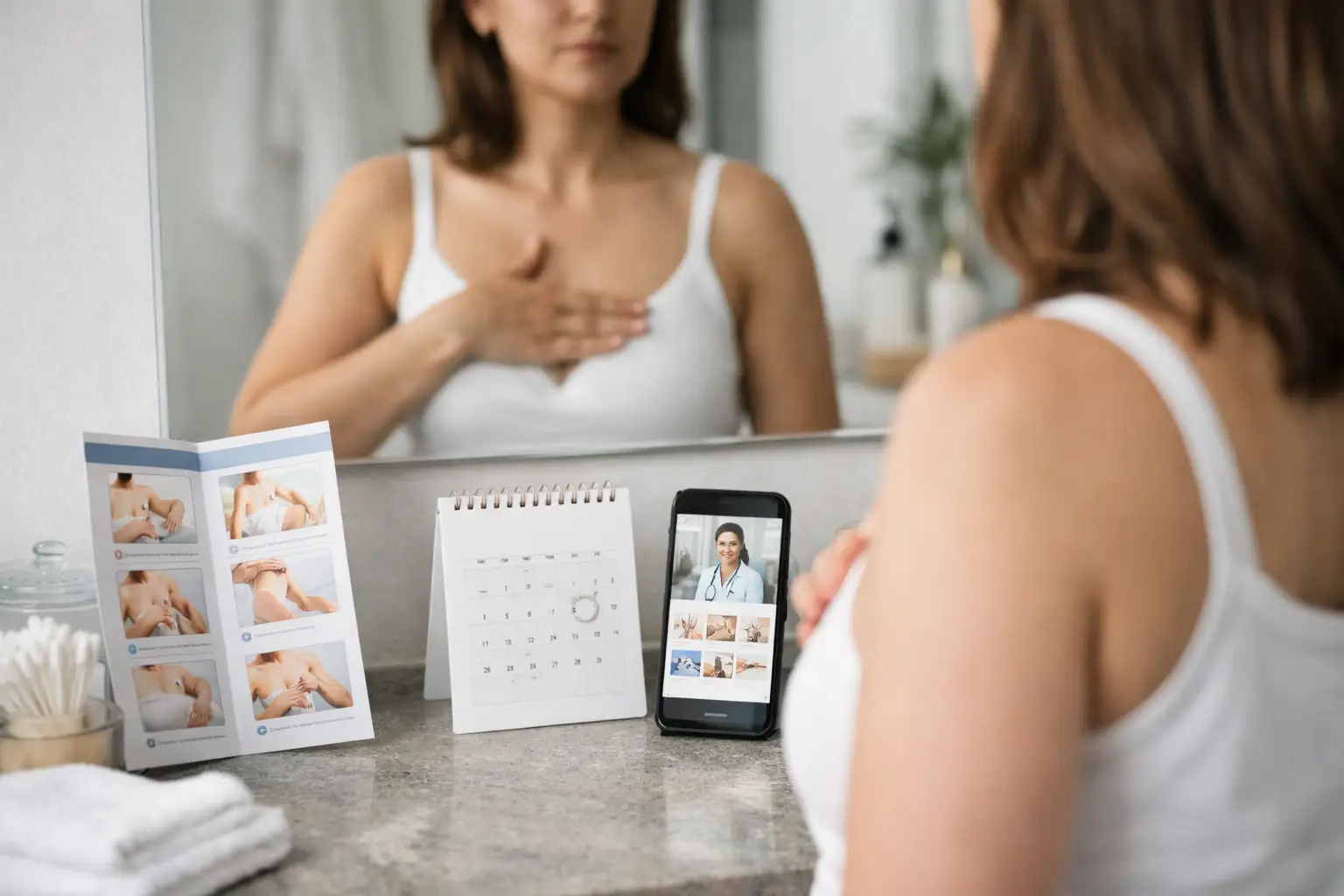
A breast self-check takes only a few minutes, but many people put it off because they are not sure what they are supposed to feel. If you have been wondering how to do a breast self exam without overthinking every lump, bump, or tender spot, the good news is that the goal is simple: learn what is normal for your body so changes are easier to notice.
Breast self-exams are not a replacement for mammograms, breast ultrasounds, or regular medical care. Still, they can help you become familiar with your breasts and alert you to something that deserves a closer look. That matters, especially because normal breast tissue can feel naturally uneven, dense, or lumpy depending on your age, hormones, and cycle.
Why knowing your normal matters
Many breast changes are not cancer. Hormone shifts, cysts, fibrous tissue, breastfeeding, weight changes, and menopause can all affect how your breasts feel. That is why a self-exam is less about hunting for one perfect warning sign and more about recognizing what is new, persistent, or clearly different for you.
Some people have naturally dense or ropy breast tissue. Others notice soreness before a period or tenderness along the outer breast and underarm area. If you examine yourself regularly, those normal patterns become easier to separate from changes that should not be ignored.
When to do a breast self exam
If you still get periods, the best time to check is usually a few days after your period ends. That is when breasts tend to be less swollen and less tender. If you check right before your period, normal hormonal swelling can make everything feel more dramatic than it really is.
If you do not get periods, choose one consistent day each month, such as the first day of the month. The exact date matters less than being regular. A routine makes it easier to compare month to month.
If you are pregnant, breastfeeding, or in menopause, your breast tissue may change in ways that make self-exams feel less straightforward. You can still do them, but it helps to focus on ongoing changes rather than reacting to every temporary shift. If you are unsure what is normal in your situation, ask your doctor or OB-GYN to show you what to look for.
How to do a breast self exam step by step
The best way to do a breast self-exam is to check both by looking and by feeling. One method is not enough on its own because some changes are visible before they are easy to feel, while others are felt before they can be seen.
Start by looking in the mirror
Stand undressed from the waist up in front of a mirror with your arms relaxed at your sides. Look at both breasts for anything that appears different from your usual baseline. A small difference in size is common, so you are not looking for perfect symmetry. You are looking for a new change.
Watch for skin dimpling, puckering, redness, swelling, rash, thickened skin, or a nipple that has newly turned inward. Then raise your arms over your head and look again. After that, place your hands on your hips and press firmly to tighten your chest muscles. This can make subtle skin changes easier to see.
Feel your breasts while lying down
Many experts suggest lying down because it spreads the breast tissue more evenly across the chest. Put a pillow under your right shoulder and place your right arm behind your head. Use the pads of the three middle fingers on your left hand to feel the right breast.
Use small circular motions and light, medium, and firm pressure. Light pressure helps you feel tissue near the skin. Medium pressure checks the middle tissue. Firm pressure helps you feel deeper tissue closer to the chest wall. You should press firmly enough to feel the different layers, but not so hard that it hurts.
Move in a pattern so you do not miss an area. Some people prefer circles from the nipple outward. Others like moving up and down in vertical lines, almost like mowing a lawn. Another option is a wedge pattern from the nipple to the outer edge of the breast. The best pattern is the one you can repeat consistently.
Make sure you cover the whole area from the collarbone to the top of the bra line and from the breastbone to the armpit. Breast tissue extends farther than many people realize, especially into the upper outer breast and underarm area.
Then repeat the same process on the left side.
Check while standing or in the shower
Some people find it easier to feel changes when the skin is wet and slippery from soap or body wash. While standing or showering, use the same finger pads, the same pressure levels, and the same pattern. This step can help you notice areas that feel different in a more upright position.
Check your nipples too
Look for discharge, scaling, crusting, or a new shape change. A small amount of discharge can happen for harmless reasons in some people, especially during pregnancy or breastfeeding, but spontaneous discharge, particularly if it is bloody or only from one breast, should be checked by a doctor.
What a breast self-exam may feel like
This is where many people get nervous. Normal breasts are not always smooth. You may feel soft tissue, firmer ridges, rope-like texture, or small movable lumps that have been there for a long time. Breasts can also feel different from one another.
A concerning lump is often described as hard, fixed, or clearly new, but there is no single rule that catches every case. Some cancerous lumps are painless. Some benign lumps feel alarming but turn out to be cysts or fibroadenomas. That is why the key question is not just, Does this feel odd? It is, Has this changed, and does it stay changed?
Changes that deserve medical attention
Call your doctor if you notice a new lump, thickened area, or firm spot that does not go away after your next cycle. Also pay attention to skin dimpling, nipple inversion that is new, swelling, warmth, persistent pain in one area, unusual discharge, or a change in breast size or shape that is not explained by your cycle.
Pain alone is less often linked to breast cancer than people fear, but ongoing pain in one specific spot should still be discussed. It is always reasonable to ask about something that worries you. Waiting for certainty is not necessary.
What self-exams can and cannot do
Breast self-exams are useful for body awareness, but they are not considered a stand-alone screening tool. A normal self-exam does not rule out breast cancer, and a suspicious finding does not automatically mean cancer.
That trade-off matters. Self-exams can help you notice changes early, but they can also cause anxiety if you are checking too often or interpreting every normal texture as a problem. For most people, once a month is enough.
It also helps to keep self-exams in context. Depending on your age, family history, genetics, and personal risk factors, you may need routine mammograms or other screening. If breast cancer runs in your family or you have had prior abnormal findings, your doctor may recommend a more personalized plan.
Making the habit easier
If you want to remember how to do a breast self exam each month, attach it to an existing routine. Choose the same date or the same point in your cycle. Keep it simple. You do not need special tools, a long checklist, or perfect technique.
You may even want to make a brief note on your phone if you find something that seems worth monitoring, such as tenderness before your period or a spot your doctor has already evaluated. That can help you tell the difference between a recurring normal pattern and something genuinely new.
For readers who follow wellness habits closely, this is one of those routines that works best when it stays calm and practical. It is not about fear. It is about paying attention.
A quick word on natural support
Some people notice breast tenderness related to caffeine, menstrual cycles, stress, or fluid retention. Gentle lifestyle support, such as wearing a supportive bra, reducing triggers that worsen soreness, and managing stress, may help with comfort. But comfort measures are not the same as evaluating a suspicious change. Herbs, supplements, and home remedies should never delay medical care if you find something unusual.
If you are learning this for the first time, do not worry about doing it perfectly. The most helpful breast self-exam is the one you actually do, regularly enough to know your normal and confidently speak up when something changes.

