
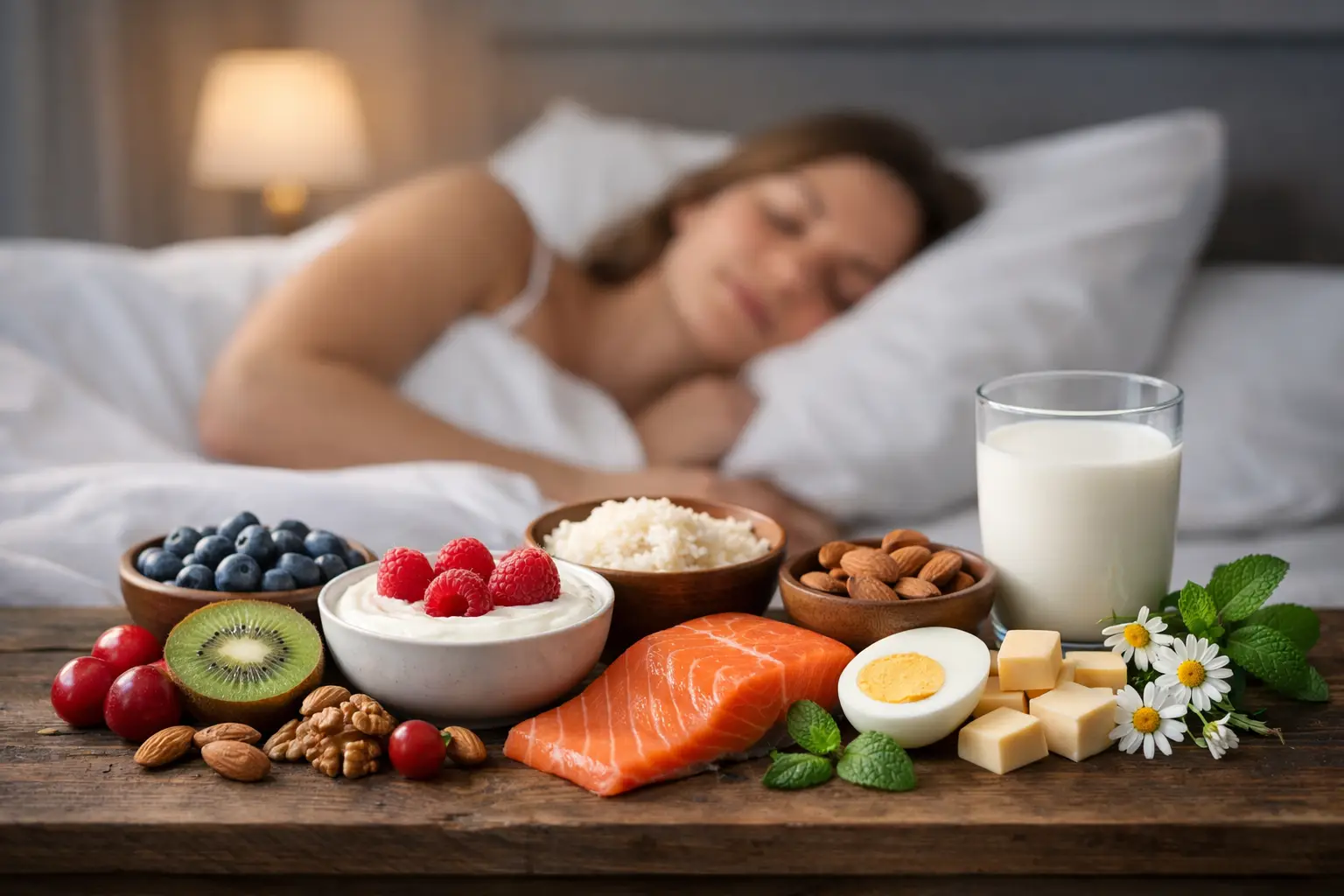
Bad sleep can wreck your mood, focus, and appetite the next day. The good news is that some foods that help you sleep better may support your body’s natural sleep cycle, especially when you eat them at the right time and keep late-night meals light.
Sleep is not just about avoiding caffeine after lunch. What you eat in the evening can affect melatonin production, blood sugar stability, and how relaxed your body feels at bedtime. No single food will knock you out like a sleeping pill, but certain options may make it easier to wind down and stay asleep.
Foods That Help You Sleep Better at Night
One of the best-known sleep-friendly foods is tart cherries. They naturally contain melatonin, the hormone that helps regulate your sleep-wake cycle. A small glass of tart cherry juice or a handful of cherries in the evening may help some people fall asleep a little faster. The effect is usually mild, but for people with inconsistent sleep, small changes can matter.
Kiwi is another smart bedtime fruit. Some research suggests kiwi may support better sleep quality, possibly because it contains antioxidants and serotonin-related compounds. It is also light and easy to digest, which matters if heavy meals tend to keep you awake.
Almonds and walnuts are often mentioned among foods that help you sleep better because they provide magnesium. Magnesium helps with muscle relaxation and may support the nervous system. Walnuts also contain small amounts of melatonin. A small portion works best here, since nuts are healthy but calorie-dense.
Oatmeal can also be a calming evening snack. Oats contain complex carbohydrates, which may help tryptophan enter the brain more easily. Tryptophan is an amino acid involved in producing serotonin and melatonin. A plain bowl of oatmeal made with milk is a simple option when you want something warm and satisfying without being too heavy.
Milk has long had a bedtime reputation, and there is some logic behind it. Dairy contains tryptophan, and warm milk may also create a soothing routine that tells your brain it is time to settle down. Yogurt and cottage cheese can offer similar benefits, though some people with reflux may do better avoiding dairy late at night.
Fatty fish like salmon, sardines, and tuna may also help. These foods provide vitamin D and omega-3 fats, which may play a role in serotonin regulation. They are not typical bedtime snacks, but including them at dinner could support better sleep later in the night.
Bananas are another easy choice. They contain magnesium and potassium, two minerals linked with muscle function and relaxation. They also offer carbohydrates, which can make a light evening snack feel more satisfying.
Chamomile tea is not exactly a food, but it deserves a mention because many people use it for sleep support. Chamomile is a popular herbal option for relaxation, and it fits naturally with Herbafama’s focus on simple wellness habits. The tea itself is caffeine-free, which is the key detail. Just be careful with very large drinks close to bed if nighttime bathroom trips are already a problem.
Best Evening Snack Combinations for Sleep
Sometimes it is not about one magic ingredient. It is the combination that works better. Pairing a complex carb with a small amount of protein or healthy fat can help keep blood sugar more stable through the night.
A few practical examples include oatmeal with milk, banana with almond butter, yogurt with kiwi, or whole grain toast with a thin layer of peanut butter. These snacks are light, balanced, and less likely to leave you overly full. That matters because going to bed stuffed can backfire, especially if you deal with indigestion or heartburn.
Foods and Drinks That Can Disrupt Sleep
If you want more sleep-friendly meals, it helps to know what gets in the way. Caffeine is the obvious one, but it is not just coffee. Tea, chocolate, energy drinks, and some sodas can all keep your brain more alert than you realize.
Alcohol is another common trap. It may make you sleepy at first, but it often leads to more fragmented sleep later in the night. Spicy foods, greasy takeout, and very large meals can also trigger reflux or discomfort that makes it harder to rest.
Sugary desserts right before bed can be a problem too. Some people notice that blood sugar swings lead to restlessness or early waking. If you want something sweet, fruit or a smaller portion is usually the better move.
How to Use Foods That Help You Sleep Better
Timing matters almost as much as food choice. A light snack about one to two hours before bed is often enough. Eating too early may leave you hungry again, while eating too late can make digestion compete with sleep.
It also helps to keep expectations realistic. These foods are supportive, not a cure for chronic insomnia. If you snore heavily, wake up gasping, have ongoing insomnia, or feel exhausted despite a full night in bed, there may be a larger issue like sleep apnea, anxiety, medication effects, or another health condition.
For many adults, though, better sleep starts with basic habits. A consistent bedtime, less screen time at night, and a simple evening snack built around foods that help you sleep better can be a smart place to start. Sometimes the smallest changes are the ones your body notices first.

